
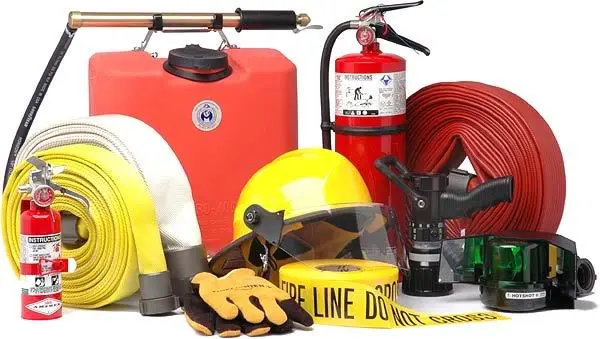
Finding good Fire Fighting Equipment in Pakistan isn’t something most businesses think about seriously until something goes wrong. That’s honestly one of the costliest mistakes you can make. Procurement managers, site safety officers, and facility managers across Karachi know this better than anyone. You pick up a cheap fire extinguisher from some unknown supplier, it sits on the wall for three years without a service, and when someone actually needs it, the cylinder’s dead. We’ve heard this story more times than we can count.
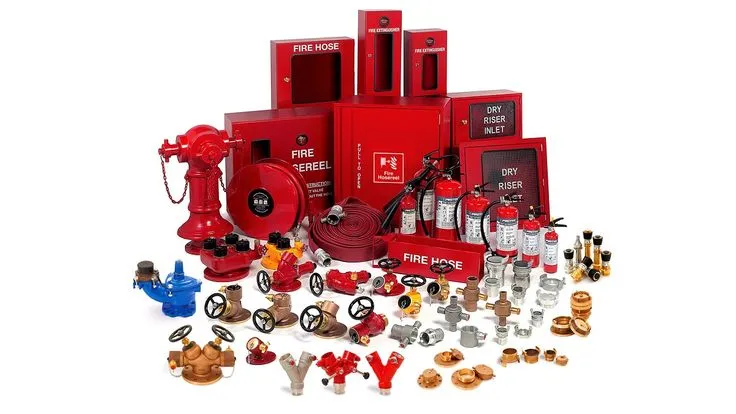
Here’s what most people don’t get told straight away. Fire safety isn’t about ticking a box on an inspection checklist. It’s genuinely about protecting your people, your machinery, your inventory, and your building. Whether you’re running a textile factory in SITE, managing a commercial tower in Clifton, overseeing a petrochemical plant near Port Qasim, or handling a construction project anywhere across Karachi and beyond, having the right Fire Fighting Equipment in the right place changes everything about how a fire incident ends.
Tarmal Construction Solutions is a subsidiary of Hussain Sulemanjee and Co., a company that’s been supplying industrial materials in Pakistan since 1961. We stock a complete range of Fire Fighting Equipment, including fire alarm systems, smoke detectors, fire extinguishers, fire blankets, fire buckets, and fire hose reel and drum assemblies. Everything we carry is built to proper standards because we’ve been doing this long enough to know that cutting corners on fire safety isn’t actually cutting anything except your own safety margin.
So if you’re here because you need reliable Fire Fighting Equipment in Karachi or anywhere in Pakistan, you’ve actually come to the right place. We provide high-quality, standards-compliant fire safety solutions, with competitive pricing and expert guidance tailored to your facility.
Why Fire Fighting Equipment Actually Matters for Your Business
Every single year, fire incidents in Pakistan cost industries billions of rupees. That figure covers property loss, machinery replacement, inventory destruction, and downtime. It doesn’t even touch the human side of it. The thing that makes this genuinely frustrating is that most of those fires were either preventable or containable with the right equipment.
Think about your own facility right now. When did you last check your fire alarm system panel to make sure it’s actually functional and not just sitting there with a dead battery? When did someone last weigh or pressure-test your fire extinguisher cylinders? Is there a fire hose reel in your building that nobody’s touched since it was first installed five years ago?
These questions matter because Pakistani regulatory standards, including requirements under NFPA guidelines and local KBCA building codes in Karachi, require commercial and industrial facilities to maintain working fire suppression and detection systems at all times. Getting caught without compliant equipment doesn’t just mean a fine. Your insurance coverage can be voided entirely if a fire occurs and investigators find your safety equipment wasn’t maintained or wasn’t there. That’s a financial hit most businesses can’t absorb.
Getting properly equipped isn’t actually that complicated. You need a supplier who knows the products, stocks genuine quality gear, and delivers to your site without messing you around on pricing or timelines. That’s genuinely what we do at Tarmal Construction Solutions.
Fire Alarm Systems and Smoke Detectors
A fire alarm is the single most important piece of early warning equipment in any building. It detects a problem before it becomes a catastrophe, giving your occupants time to get out and giving your team time to respond. The gap between having a working fire alarm and not having one is the gap between a manageable incident and a total loss.
What is a fire alarm system exactly? It’s an integrated network of detection devices, a central control panel, and alerting devices that work together to automatically identify fire or smoke and trigger an alarm response. A complete fire alarm system includes a fire alarm system panel as the brain of the whole setup, smoke detectors and fire detectors throughout the building, a smoke alarm sensor where needed in duct systems, heat detectors in areas prone to dust or steam, fire alarm manual call points at key exit routes so people can trigger the alarm manually, plus sounders and visual strobes so everyone knows what’s happening.
We supply three main types of fire alarm system.
Conventional Fire Alarm Systems
Conventional fire alarm systems use zone-based detection. Each zone covers a section of the building, so when a detector triggers, you know roughly which area the problem is in.
These systems are cost-effective, straightforward to install, and genuinely reliable for smaller buildings and simpler layouts.
Addressable Fire Alarm Systems
Addressable fire alarm systems are the step up that most serious facilities need. Every single detector in an addressable fire alarm system has its own unique address. When something triggers, the fire alarm system panel tells you exactly which device activated, which floor, which room, which location. For large industrial plants, multi-storey commercial buildings, warehouses, and facilities in Karachi’s industrial zones like Korangi or SITE, the precision of an addressable fire alarm system saves critical response time.
Advanced Fire Alarm Systems
Advanced fire alarm systems go even further. They can integrate with building management systems, CCTV feeds, suppression systems, and access control so your entire building responds automatically to a detected threat. The application of fire alarm technology at this level is really standard now in hospitals, hotels, data centers, and high-rise commercial towers.
Proper fire alarm installation matters as much as the equipment itself. A badly installed fire alarm system can fail to trigger at all, or it produces constant false alarms until someone disables it out of frustration. Real fire alarm installation requires trained technicians who understand fire alarm design properly, including how to space detectors correctly, route cables safely, configure panel zones, and make sure the whole system passes a functional test.
Good fire alarm design starts before a single cable gets pulled. It involves a site survey, risk assessment, detector placement calculations, and checking everything against local fire codes. The design shapes where every smoke alarm sensor goes, how zones are configured, and how the system behaves when it activates.
Fire alarm system price in Pakistan varies quite a bit depending on system type, building size, number of devices, and installation requirements. Conventional systems cost less upfront. Addressable fire alarm systems cost more but give you dramatically more control and reliability. Smoke detector price in Pakistan also varies between ionization-type and photoelectric-type detectors. We don’t do vague price ranges here. Contact us with your building details and we’ll give you a real quotation based on your actual situation.
Fire Blankets
A fire blanket is honestly one of the most underrated pieces of fire fighting equipment you can have on site. It’s not expensive, it takes up almost no wall space, and in the right situation it can genuinely stop a fire before it even becomes a fire emergency.
What’s a fire blanket actually for? It’s a sheet woven from fire-resistant fibreglass material that you use to smother a small fire by cutting off its oxygen supply. The most common use is in kitchens and canteens where cooking oil fires can flare up instantly. Here’s something a lot of people don’t realise until it’s too late: you absolutely cannot use water on a cooking oil fire. Throwing water on burning cooking oil causes a violent steam explosion that spreads the fire dramatically and can cause serious burns. A fire blanket is the correct response. You wrap it over the burning pan, you don’t lift the blanket, and you let it smother the fire out.
Fire blankets are also used to wrap around a person whose clothing has caught fire, and to provide a protective shield for someone evacuating through a smoke-filled area.
Not every fire blanket on the market is actually safe. Some cheaper products fail under real fire conditions, either catching fire themselves or not containing the heat properly. We stock fire blankets certified to EN 1869 standards because we won’t put something on our shelves that’s going to fail when someone actually needs it.
Fire blanket price in Pakistan is genuinely affordable and there’s really no excuse for not having one in every kitchen, canteen, laboratory, welding area, and near every electrical panel on your site. We carry multiple sizes from standard 1m x 1m kitchen blankets up to larger industrial and welding-grade blankets. Contact us for current pricing and bulk order rates.
Where should you keep fire blankets? Right next to the hazard, not in a back cupboard. In kitchens, mount one within arm’s reach of the cooking equipment. In welding areas, keep one at the workstation. In server rooms and electrical switch rooms, mount one near the door.
Fire Buckets
The fire bucket might look like a simple old-fashioned tool but it earns its place in any serious fire safety setup. In Pakistan’s construction sites, industrial workshops, fuel storage areas, and generator rooms, a properly filled fire extinguisher bucket positioned at the right spot can stop a small spill fire before it catches something bigger.
What’s special about a fire bucket? It’s specifically designed for fire use. The classic conical shape is intentional. It means you can’t use the bucket for anything else, so when you actually need it in an emergency, it’s full of the right material and it’s where it’s supposed to be. Sand-filled fire buckets are used on flammable liquid fires and near electrical equipment where water would be dangerous. Water-filled buckets handle ordinary combustible material fires like wood and paper.
Pakistani safety regulations and NFPA guidelines actually require fire buckets in many industrial and construction site environments. They’re not optional. And honestly, for what they cost versus what they protect, they’re one of the best value fire safety investments on the list.
We supply standard red-painted steel fire buckets with stands in quantities suited to single sites or large multi-site projects. Ask us about bulk pricing for construction projects across Karachi and beyond.
Fire Extinguishers
Walk into almost any building in Pakistan and you’ll see a fire extinguisher on the wall. Walk into a lot of buildings and you’ll see one that hasn’t been serviced in years, has the wrong type printed on the label for the hazards in that room, or is actually a completely empty cylinder that someone forgot to recharge. This is the real fire extinguisher problem in Pakistan and it’s not actually about availability, it’s about knowing what you need and maintaining what you have.
What is a fire extinguisher? It’s a portable pressurised device that discharges a fire-suppressing agent to control or put out a small fire. The key word there is portable. It’s your first-response tool before a fire grows beyond what one person can handle.
How many types of fire extinguisher are there? There are several main types and each one handles specific fire classes.
DCP fire extinguisher units use dry chemical powder and they’re the most common type you’ll find across Pakistan. DCP fire extinguishers work across Class A fires involving wood and paper, Class B fires involving flammable liquids like petrol or diesel, and Class C fires involving electrical equipment. They’re versatile, they’re affordable, and they’re genuinely effective. The trade-off is the powder residue, which can damage sensitive equipment like electronics. But for general industrial and commercial use, a DCP fire extinguisher is the most practical all-rounder.
CO2 fire extinguisher units use carbon dioxide gas. So what gas is used in fire extinguisher of this type? Pure CO2, which displaces oxygen around the fire and smothers it without leaving any residue at all. That makes CO2 fire extinguishers the right choice for server rooms, electrical switchgear rooms, control panels, and anywhere that powder contamination would cause secondary damage. CO2 fire extinguisher price in Pakistan runs higher than DCP but for the applications where it’s needed, it’s absolutely worth it.
Halotron fire extinguisher units are a clean-agent system used in aviation facilities, data centers, telecommunications equipment rooms, and sensitive industrial control environments. A halotron fire extinguisher leaves zero residue and zero moisture, so it protects the equipment while it fights the fire. It’s more expensive than both DCP and CO2 but for the right environment it’s genuinely the only sensible choice.
Fire extinguisher ball units are passive auto-activation devices. You can mount one in a space or simply throw it into a fire. When it contacts flames it activates automatically and disperses dry chemical powder. These are genuinely useful for unmanned electrical rooms, generator enclosures, and storage areas that aren’t regularly occupied.
Every fire extinguisher is built around a fire extinguisher cylinder. The quality of that extinguisher cylinder determines whether the unit holds pressure properly over its service life. Poorly manufactured or corroded cylinders fail to maintain pressure and the extinguisher won’t discharge when triggered. We stock extinguisher cylinders from quality-tested manufacturers across the full size range from 1kg through to 9kg and larger.
How to use a fire extinguisher? Remember the PASS technique. Pull the pin. Aim the nozzle at the base of the fire, not the flames. Squeeze the handle to discharge. Sweep from side to side across the base. Train every member of your team on this. An extinguisher nobody knows how to operate is just a red decoration on your wall.
Fire extinguisher price in Pakistan varies by type and capacity. DCP fire extinguisher units are the most affordable entry point. CO2 fire extinguisher price in Pakistan is higher. Fire extinguisher price also changes with cylinder size. We stock the full range so contact us for specific pricing based on what you actually need.
Looking for fire extinguisher in Karachi specifically? We’re based at BC-10, Shop-7, Block-9, Clifton and we supply to facilities across Karachi including SITE area, Korangi Industrial Zone, Port Qasim, Landhi, North Karachi, and everywhere in between.
Fire Hose Reel and Drum
A fire hose reel is a fixed installation that gives you sustained firefighting capability. Where a portable extinguisher is a first-strike tool, a fire hose reel connected to your building’s water supply gives you continuous flow for as long as you need it. That’s a completely different level of firefighting capacity and for any building above a basic size, it’s not optional, it’s essential.
What is a fire hose reel? A fire fighting hose reel consists of a semi-rigid hose wound onto a rotating drum, connected to a dedicated water supply pipeline. You pull out the hose, open the control valve, and direct the jet at the fire base. The hose stays connected so you don’t run out. You can manoeuvre around furniture, through doorways, and into different rooms while maintaining continuous water flow.
We supply several configurations. A standard single fire hose reel is wall-mounted and covers most commercial and mid-sized industrial buildings. It’s the baseline requirement for building compliance across Karachi’s commercial sector.
A double door fire hose reel cabinet is an enclosed steel cabinet that houses the hose reel assembly behind two doors. The double door fire hose reel cabinet protects the equipment from dust, industrial contamination, tampering, and weather exposure while keeping it immediately accessible and clearly visible to anyone in the building. In high-traffic industrial environments and commercial buildings, a double door fire hose reel cabinet is both a compliance requirement and genuinely sensible protection for the equipment inside.
Fire fighting hose reel drum assemblies are used in larger industrial environments where standard wall-mounted reels aren’t sufficient. A fire fighting hose reel drum carries greater hose length and handles higher flow rates, making it the right choice for large warehouses, manufacturing plants, and open industrial facilities where you need reach across a bigger area.
Key things to consider when specifying a fire hose reel include hose length (standard buildings typically need 20m to 36m), hose internal diameter (19mm or 25mm depending on required flow), working pressure rating, cabinet material for indoor versus outdoor installations, and whether you need a swinging or fixed drum arm configuration.
Installation of fire hose reel systems needs to comply with local fire codes. Positioning matters because every point in the protected area needs to be reachable when the hose is fully extended. That’s a design calculation, not a guess. We can advise on layout and supply complete systems for Karachi-based projects.
Fire Classes and Choosing the Right Equipment for Each One
Here’s something that genuinely trips people up. They see a fire extinguisher, they grab it, they point it at the fire, and they make things much worse. Not because they panicked, but because they used the wrong type. Understanding fire classes isn’t complicated but it’s the kind of thing that should be on a laminated card next to every extinguisher on your site.
Class A fires involve ordinary combustibles like wood, paper, textiles, and cardboard. Water, foam, or DCP fire extinguishers all work here.
Class B fires involve flammable liquids like petrol, diesel, oils, and chemical solvents. Use foam, DCP, or CO2 fire extinguisher units. Never water. Water on a Class B fire spreads the burning liquid and makes things dramatically worse.
Class C fires involve live electrical equipment. Use a CO2 fire extinguisher or halotron fire extinguisher. DCP technically works but destroys the equipment in the process. Absolutely never water on a live electrical fire.
Class D fires involve combustible metals like magnesium and sodium. These need specialist dry powder agents that are specific to the metal involved. Standard DCP won’t handle them.
Class F fires involve cooking oils and deep fat fryers. Use a wet chemical extinguisher or a fire blanket to smother the burning pan. Water on a Class F fire causes a violent steam explosion. This is genuinely one of the most dangerous mistakes in kitchen fire response.
Get the right equipment matched to the actual hazards in each area of your facility. It’s not complicated once you know the classes and it makes an enormous practical difference.
Fire Safety Compliance in Karachi and Pakistan
Pakistani fire safety requirements combine local regulatory frameworks with internationally recognised standards and most businesses in Karachi genuinely don’t have a complete picture of what they’re actually required to maintain.
NFPA standards are widely followed across Pakistan’s oil and gas, petrochemical, power, and industrial sectors. NFPA 10 covers portable fire extinguishers. NFPA 72 covers fire alarm systems. NFPA 13 covers sprinkler installations. If you’re operating in any of those industries, your facility almost certainly has NFPA compliance requirements built into your contracts, insurance policies, or client specifications.
The Karachi Building Control Authority requires fire safety provisions in commercial and industrial buildings throughout the city. This covers fire alarm installation, extinguisher placement by area type, emergency lighting, and exit signage. Non-compliance during a building inspection creates liability exposure and can halt operations.
Industrial insurance policies in Pakistan increasingly require documented fire safety provision. If you experience a fire and an investigation finds your Fire Fighting Equipment wasn’t in place, wasn’t maintained, or wasn’t the correct type for your hazards, your policy coverage can be voided. That’s not a theoretical risk. It happens. And the financial consequences of an uninsured fire loss in a significant facility are genuinely company-ending.
Annual maintenance matters too. Fire extinguisher cylinders need annual pressure checks and recharging. Smoke detectors and fire alarm systems need periodic functional testing. Fire hose reels need hose pressure tests and valve checks. Build this into your facility maintenance calendar and keep the records because inspectors and insurers will ask to see them.
If you’re not sure whether your current setup is compliant with what’s actually required for your type of facility in Karachi, we’re happy to walk through your requirements with you. Call us at 021-32728469.
Why Karachi’s Industrial Businesses Trust Tarmal Construction Solutions
There are honestly plenty of fire equipment suppliers in Pakistan. So why do serious industrial operators across Karachi keep coming back to us?
We stock genuine products. Every item we supply meets proper safety standards. We don’t deal in counterfeit equipment or products that look right on a shelf but fail under real conditions. When you’re buying fire fighting equipment, the only thing that matters is whether it works when someone actually needs it.
Our history backs us up. Tarmal Construction Solutions operates under Hussain Sulemanjee and Co., a company established in 1961 with decades of supplying safety-critical materials to Pakistan’s oil and gas, petrochemical, power, cement, textile, and telecom industries. These are sectors that can’t afford to cut corners and neither can we.
We serve Karachi’s major industrial zones directly. Whether your facility is in SITE, Korangi, Port Qasim, Landhi, North Karachi, or anywhere across the city, we can supply and deliver. We also serve clients across Pakistan beyond Karachi when the project requires it.
Our pricing is competitive and transparent. Fire Fighting Equipment pricing—including fire alarm systems, fire extinguishers, fire blankets, and smoke detectors—is provided with clear quotations based on your actual requirements. No inflated margins, no surprise charges when the invoice arrives.
We handle bulk orders without a problem. If you’re outfitting an entire facility, multiple sites, or supplying a large construction project, contact us to discuss your full requirements and we’ll put together a comprehensive Fire Fighting Equipment supply plan.
And we actually give you useful guidance on what you need. Not sure whether you need a conventional or addressable fire alarm system? Not sure which fire extinguisher types or other Fire Fighting Equipment are right for your hazard areas? We’ll tell you what actually makes sense for your situation rather than just selling you the most expensive option.
Common Questions About Fire Fighting Equipment in Pakistan
What is a fire alarm system and how does it work?
A fire alarm system is a network of detection devices connected to a central control panel that monitors your building continuously and triggers an alert when it detects smoke, heat, or fire. The fire alarm system panel receives signals from smoke detectors, heat detectors, and fire alarm manual call points throughout the building and activates sounders and visual alarms to alert occupants. Modern addressable fire alarm systems tell you exactly which device triggered the alarm so you can locate the problem immediately. Along with advanced detection, proper Fire Fighting Equipment must be in place to respond effectively to a fire. The application of fire alarm technology has expanded well beyond simple bells and now includes integration with sprinkler systems, building management software, emergency services notification, and coordination with on-site Fire Fighting Equipment for comprehensive fire safety.
What is an addressable fire alarm system and why do large buildings need one?
An addressable fire alarm system gives every single detector on the network its own unique address. When a smoke alarm sensor or heat detector activates, the fire alarm system panel displays the exact location of that specific device rather than just which zone it’s in. In a large industrial facility or multi-floor commercial building in Karachi, this matters enormously because it tells your response team exactly where to go instead of searching an entire section of the building. Addressable fire alarm systems are also much easier to maintain because you can test individual devices from the panel. For any facility above a basic size or complexity level, the addressable system is genuinely worth the additional investment over a conventional setup.
How many types of fire extinguisher are there and which one do I need?
There are several main types of fire extinguisher and each one handles different fire classes. DCP fire extinguisher units using dry chemical powder are the most versatile and handle wood, paper, liquid, and electrical fires. CO2 fire extinguisher units are ideal for electrical equipment and server rooms because CO2 leaves no residue. Halotron fire extinguisher units are clean-agent systems used in data centers and aviation facilities. Fire extinguisher ball units auto-activate when they contact flames and work well in unmanned spaces. The right choice depends on what hazards exist in each specific area of your facility. We can help you match equipment to hazard classes across your whole site.
What gas is used in a CO2 fire extinguisher?
Carbon dioxide is the agent in a CO2 fire extinguisher. When it discharges, the CO2 gas displaces the oxygen around the fire and suffocates it without leaving any powder residue or moisture. That makes it genuinely ideal for electrical panels, server rooms, and sensitive electronic equipment where a DCP fire extinguisher would cause serious secondary damage from the powder. CO2 fire extinguisher price in Pakistan is higher than DCP but for the right application it’s clearly the better choice. One important safety note: CO2 discharge in an enclosed space creates an asphyxiation risk so make sure people evacuate before or during discharge in small rooms.
How often should fire extinguisher cylinders be tested and serviced?
Annual servicing is the minimum. Every fire extinguisher cylinder should be checked for pressure, physical condition, and correct agent level once a year. A full hydraulic pressure test on the extinguisher cylinder itself is typically required every five years. DCP fire extinguisher units should be fully discharged and recharged every three to five years to prevent the powder from caking inside and blocking the discharge. CO2 fire extinguishers should be weighed annually because CO2 leaks slowly even from a sealed unit, and if the weight has dropped by more than ten percent the unit needs refilling. Keeping service records is important for insurance and compliance purposes.
Do I need a fire hose reel if I already have fire extinguishers?
In most commercial and industrial buildings yes, you genuinely do. A fire hose reel gives your team sustained firefighting capability connected directly to the building’s water supply. Portable extinguishers discharge in seconds and then they’re empty. A fire fighting hose reel system gives you continuous water flow for as long as you need it. Many fire codes, including NFPA guidelines followed by Karachi’s industrial sector, require both. A double door fire hose reel cabinet also protects the equipment from dust and damage while keeping it clearly visible and immediately accessible. For larger facilities, a fire fighting hose reel drum with extended hose length and higher flow rate is the right configuration.
What is the best fire blanket for a kitchen or canteen?
Look for EN 1869 certification and the right size for your largest realistic fire scenario. For a standard kitchen or canteen, a 1m x 1m fire blanket is usually sufficient. For a larger commercial kitchen operation, go for 1.2m x 1.8m or bigger. Fire blanket price in Pakistan is genuinely affordable so there’s no reason to compromise on size or quality. The best fire blanket is one that’s rated properly for the job, mounted right next to the cooking equipment where someone can grab it instantly, and that your staff have actually been shown how to use. Keep it on the wall next to the cooker, not in a storage room.
What’s the difference between a smoke detector and a heat detector?
A smoke detector responds to particles in the air from combustion. It’s your early warning device because it picks up a fire while it’s still in its early smouldering phase before significant heat or flame develops. A smoke alarm sensor can be ceiling mounted or duct mounted depending on the application. A heat detector responds to temperature rise rather than smoke, and it’s used in environments where a smoke detector would generate constant false alarms, like dusty workshops, kitchens, and boiler rooms. Both are types of fire detectors used in a properly designed fire alarm system, and most buildings need a combination of both rather than just one type. Alongside these detectors, proper Fire Fighting Equipment must be installed to ensure an immediate and effective response. Smoke detector price in Pakistan varies between ionization and photoelectric models, with photoelectric types being more responsive to slow smouldering fires and enhancing the overall performance of the building’s Fire Fighting Equipment.
Contact Tarmal Construction Solutions Today
Sorting out your fire fighting equipment properly doesn’t need to be complicated. We stock everything you need, we know the products properly, and we’ll give you straight answers on what your facility actually requires.
Whether you need a full addressable fire alarm system installed across a multi-floor building in Karachi, a bulk supply of DCP fire extinguishers and fire extinguisher cylinders for a large industrial site, double door fire hose reel cabinets for a new commercial build, fire blankets for every kitchen and canteen across your facilities, or fire buckets and stands for a construction project, we can handle it.
Call us now or send us your requirements by email and we’ll come back to you fast with honest pricing and practical advice.
Phone: 021-32728469 Email: Tarmalsteel@gmail.com Address: BC-10, Shop-7, Block-9, Clifton, Karachi
Get a Quote: tarmalconstruction.com/contact-us
Our Fire Fighting Equipment Range
Fire Alarm: Conventional and addressable fire alarm systems, smoke detectors, fire detectors, smoke alarm sensors, manual call points, fire alarm system panels, and fire alarm installation support.
Fire Blanket: EN 1869 certified fire blankets in standard and large sizes for kitchen, canteen, welding, and industrial use.
Fire Bucket: Red steel fire extinguisher buckets with stands for sand or water use across industrial, construction, and commercial sites.
Fire Extinguisher: DCP fire extinguisher, CO2 fire extinguisher, halotron fire extinguisher, and fire extinguisher ball types across the full cylinder size range.
Fire Hose Reel and Drum: Single hose reels, double door fire hose reel cabinet assemblies, and fire fighting hose reel drum units for all building types and sizes.
Tarmal Construction Solutions, a subsidiary of Hussain Sulemanjee and Co., established 1961. Supplying fire fighting equipment and industrial materials across Karachi and Pakistan.
Installing fire fighting equipment
Installing fire fighting equipment properly is just as important as choosing the right system. That’s why professional installation is always recommended to ensure safety and reliability. If you are looking for expert installation and maintenance services, you can visit our trusted partner Reliable Services, who specialize in fire fighting equipment installation and related safety services.