
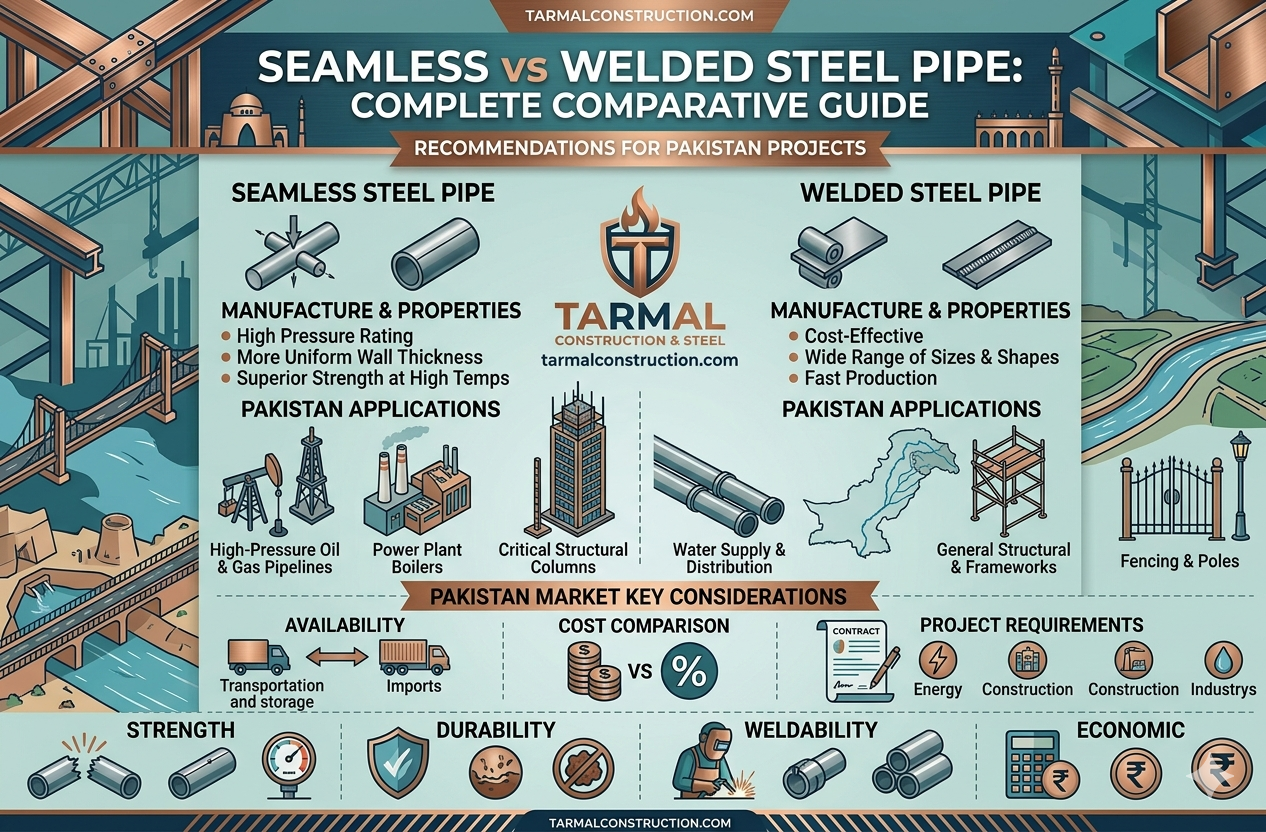
In Pakistan, steel pipe is used for almost all major construction works and industrial projects. The right pipe plays an important role in safety, costs, pressure and maintenance in water supply lines, fires, gas networks, HVAC piping, factories, bridges, warehouses and oil and gas projects.
The question which is ofen asked by the buyers is simple: Seamless steel pipe or Welded steel pipe?
This will vary by project. There are times when it’s not best to use a seamless pipe, and a welded pipe is not necessarily the less expensive alternative. All types are strong in their own ways. When it comes to house, commercial building, factory or infrastructure project in Pakistan, the optimum choice is to match the pipe with the pressure, temperature, fluid, installation location, budget and a required standard.
Since we deal with our clients practically we suggest choosing the type of pipe depending on its purpose of use before comparing pricing at Tarmal Construction. Understand the difference between seamed steel pipe and welded steel pipe and the application of the two. Learn to buy the right pipe in thePakistani market, to get rid of your wrongful thinking in choosing and buying a pipe by your good action.
What Is Seamless Steel Pipe?
A seamless steel pipe is a steel pipe formed by a procedure without any welding. In short, a solid piece of steel is melted into a hollow pipe. A pipe that is pipe free and is generally utilized in critical service, high pressure, high temperature appliances.
ASTM A106 is one of the common standards for seamless carbon steel pipe, which includes seamless carbon steel pipe for high temperatures and sizes from NPS 1/8 to NPS 48. The standard also includes that the pipe can be welded, bent, flanged or formed in similar ways. (ASTM International | ASTM)
That is why the seamless steel pipe Pakistan buyers prefer it in boilers, process plants, oil and gas work, power plant, refinery, high-pressured water line, steam line, and industrial systems etc.
What is a Welded Steel Pipe?
A welded steel pipe is a pipe formed by steel plate, strip or coil materials, made into a circle and then used welding technology to weld the edges of the materials. It may extend along the pipe length (ERW pipe) or it may be spiral welded (spiral welded pipe).
ASTM A53 includes seamless and welded black and hot dipped galvanized steel pipe 1/8 NPS through 26 NPS. Commonly used for general mechanical grade, pressure, water and gas, air and structural applications as required by the project. (ASTM International | ASTM)
Welded steel pipe is commonly being utilized in the construction, water supply, gas distribution, fabrication, structural, fencing, fire fighting system and various general industrial lines in Pakistan. It is more readily available and may be less costly than seamless pipe for many applications.
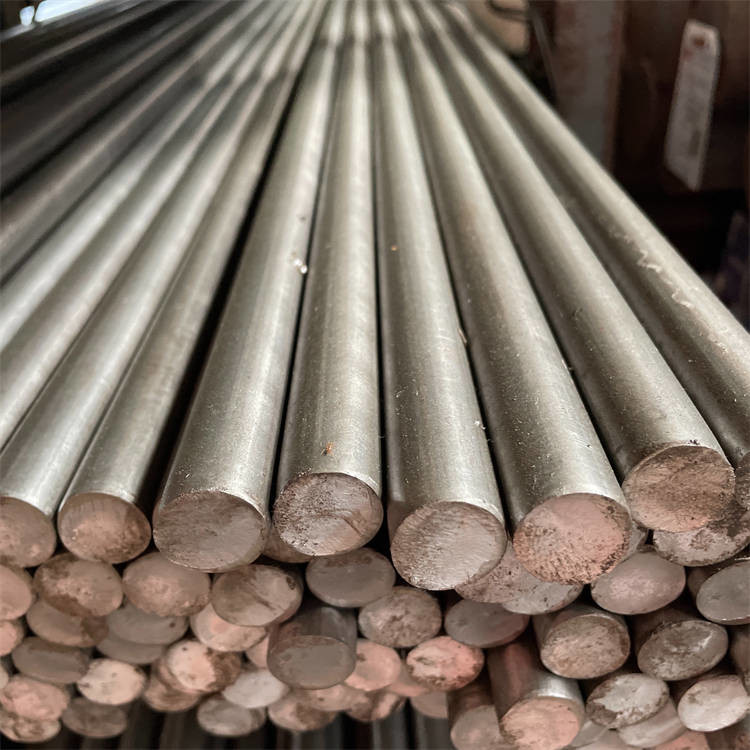
Main Difference Between Seamless and Welded Pipe
The only difference is that they are made differently.
Seamless pipe is a pipe that is not joined in a welded manner. The weld seam is a feature of welded pipe. This one difference impacts pressure performance, testing, availability, size range, price and application.
Typically, seamless pipe is desired when the application involves high pressure, high temperature or critical fluid service. Welded pipe is used for the above reasons as well as for ease of sourcing and being able to supply large diameter pipe.
A welded pipe doesn’t have to be a weak pipe. Welded pipes produced with the proper standard can be very good. API 5L is for seamless and welded steel line pipe used in pipeline transportation systems for petroleum and natural gas industries, for instance. (Law Resource)
This does not imply it is just “seamless is good, welded is bad.” The question is whether the pipe chosen is suitable for the design pressure, service condition, standard and quality.
Seamless Pipe Advantages
The key benefit of seamless pipe is its uniformity of the pipe body. Because there is no weld seam, no welded line exists which can respond differently to stress than the rest of the pipe.
Therefore seamless pipe is an excellent choice for use in:
- High-pressure lines
- High-temperature lines
- Steam systems
- Boiler lines
- Oil and gas processing
- Chemical plants
- Power plants
- Hydraulic systems
- Critical industrial piping
Additionally, seamless pipe provides increased confidence in applications where pressure cycles, heat, vibration and safety risk are significant. That is why engineers often call on ASTM A106 seamless pipe for use in high-temperature and industrial pressure systems. (ASTM International | ASTM)
Even if the cost of a seamless pipe is higher than that of other pipe types, it may be the preferred option in projects in Pakistan where failure can result in stopped production, equipment damage, or safety hazards.
Seamless Pipe Disadvantages
There are disadvantages to seamless pipe. It’s generally more costly than welded pipe. It might also have longer procurement times in Pakistan for particular grades and wall thicknesses, and imported sizes as well.
Availability is another issue. Welded pipes are more prevalent in the markets of general construction. It may be necessary to obtain seamless pipe from a supplier, stockist or importer. Potential buyers tend to evaluate both ERW pipes and API 5L/ ASTM A53 pipes and seamless carbon steel pipe under ASTM A106 in the same procurement process, as some local suppliers offer both types of pipes in the same description. (Zubair Traders)
Seamless pipe is generally not required for water lines, fences, handrails, and other fabrication or material projects where the water pressure is low. In such instances, it can add value to the project but without any real worth.
Welded Pipe Advantages
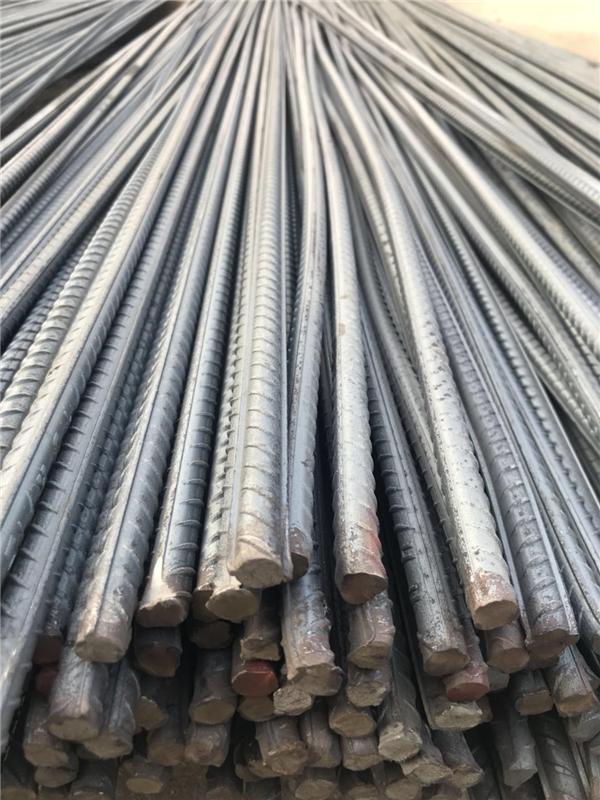
Welded pipe is readily available and is practical and cost-effective. More easily manufactured on a large scale, in various sizes. This is very important for construction, as waiting for pipes can impact construction tasks such as plumbing, fire extinguishing initiatives, HVAC, and fabrication tasks.
Welded pipe is commonly used for:
- Building water supply
- Fire fighting systems
- Low and medium lines of pressure
- Structural fabrication
- Scaffolding and frames
- Fencing and boundary work will be carried out as necessary.
- Gas distribution lines
- General mechanical work
- Large diameter pipelines
Welded pipe manufacturing has been set up in a number of sectors in Pakistan. API line pipe is defined as longitudinal electric welded steel pipe manufactured to API 5L specifications that come in two grades: PSL1 and PSL2, in diameters between 3/4 and 12 3/4 inch and lengths of 6 metres to 12.20 metres by International Industries Limited.
Crescent Steel also says its spiral pipe plant can produce line pipe ranging in diameter from 8.625 inches to 120 inches, wall thickness between 4 mm and 25.4 mm and grade up to API 5L X-100 for large diameter line pipe. (crescent.com.pk)
This is an illustration of why welded pipe is frequently used in big infrastructure and utility projects in Pakistan.
Welded Pipe Disadvantages
Welded pipe is subject to main concern: Weld seam. Poorly-manufactured or poorly-tested pipes or pipes installed in the wrong service can cause the seam to be a weak point. It’s for this reason that quality control is important.
Welded Pipe should not be purchased based solely on price. They should verify the standard, grade, wall thickness, test certificate, manufacturer and also determine if the pipe can be used for the desired fluid and pressure.
If the design standard permits, and the pipe is tested, then welded pipe may still be used for critical high-pressure or high-temperature service. However, many engineers would prefer to use seamless pipe under extreme conditions.
What Should Be the Choice of Pipe for Use in Pakistan?
In most construction projects in Pakistan, welded pipe is sufficient. In high-pressure, high-temperatures systems or critical systems, seamless pipe may be a better option.
When to use seamless steel pipe:
- The line transports chemicals, oil, gas or high-pressure steam.
- The system is a high temperature system.
- In the project specification it is clearly stated that the goal is to have seamless pipes.
- The pipe is a part of a boiler, process plant, refinery or power plant.
- Failure would result in significant safety or manufacturing hazard
The client/consultant must have a seamless standard like ASTM A106 for the specification.
When welded steel pipe is used:
- The line is for normal water supply
- Low and medium pressure system
- The project requires large diameter pipe.
- The budget/priority is relevant
- The use is either structural or fabrication.
- The pipe is used for fencing, frames, sheds or construction purposes in general.
The specification allows the use of ASTM A53 (welded pipe), ERW pipe or spiral welded pipe.
In the normal building services and fabrication, Tarmal Construction is generally advised to use welded pipes, and in the technical industrial systems of high pressure, high temperature and risk, seamless pipes are recommended.
Water Supply Pipe: Seamless or Welded Pipe?
Welded galvanized pipe, MS pipe, PPRC, HDPE or other materials mentioned in the design can be used for normal building water supply in Pakistan. For normal water lines, seamless steel pipe is generally not required, unless the specifications of the project require it or the pressure is high.
In the case of commercial buildings, factories and pumps, the pipe schedule and pressure rating will be more important than the name of the pipe. When the welded pipes are properly designed, they can serve many water systems.
Seamless Pipe and Welded Pipe in Gas Lines: Key Differences
It is important to carefully choose gas piping. Welded steel pipes manufactured according to appropriate standards are widely used to transport the gas at low pressure. IIL’s API line pipe is available for natural gas and petroleum distribution systems and is manufactured as a longitudinal electric welded steel pipe, in accordance with API 5L. (International Industries Limited)
The engineer could require API 5L seamless or welded pipe, for high pressure gas, oil or process piping, based on pressure, grade, location class and testing requirements. Do not opt for gas pipe because it is available in the market. The design standard and safety requirements shall be foremost.
Seamless vs Welded Pipe for Fire Fighting Systems
Reliable pipes, fittings, valves, supports and testing are required for fire fighting systems. Many fire fighting installations use welded steel pipe, particularly where the specification of the pipe and its coating meet the required standards.
Unless the project design specifies otherwise, seamless pipe is not typically necessary for standard building fire protection systems. The main considerations are pipe schedule, corrosion protection, joining technique, pressure testing and consultant / approval by the Authority.
Seamless vs Welded Pipe for Structural Applications
Of the two, welded pipe is generally more appropriate for structural applications. Available in handy sizes and can be more affordable. In most cases, sheds, gates, railings, fences, frames, light structure column, signboards or fabrication work will not require seamless pipe.
When used in structure, the buyer should pay attention to wall thickness, straightness, surface quality, steel grade, welding quality, and corrosion protection. When a pipe is exposed to the outdoors, galvanized or properly painted pipe can help decrease maintenance.
Seamless vs Welded Pipe for Industrial Use
When it comes to industrial piping, the decision is more technical. In the same site, seamless and welded pipes of the same size can be used in a textile mill, sugar mill, cement plant, power plant, chemical plant or food processing plant.
Seamless pipe might be needed for steam, boiler, compressed air, high-temperature oil and process lines. Welded pipe can be used for cooling water, drainage, low pressure air systems, general utility pipe lines and structural applications.
The right piping design should be selected, not based on a shop person’s recommendation. Tarmal Construction recommends that buyers verify the pressure, temperature, fluid, corrosion susceptibility, pipe schedule, grade and testing requirement prior to purchase.
Price Difference in Pakistan
The price of seamless steel pipe is generally higher than that of welded pipe, which is due to the more complex manufacturing process and more specialized application of seamless steel pipe. It also can include import cost, currency movement, shipping time and limited stock.
Welded pipe is also generally less expensive since it’s manufactured in large volumes and easily accessible for construction projects and utilities. It is also available more readily in larger diameters.
But, the low cost pipe isn’t always the low cost pipe. Failure of a low cost welded pipe on a critical line could cost more to repair and result in significant downtime costs. However, it can be a waste of money to purchase seamless pipe for regular fencing or low pressure water use.
The good buyer does not only look at the purchase price, he looks at the total cost!
There are Many Wardrobe Colors
These are the standards that are typically observed when buying steel pipes in Pakistan:
- ASTM A106, Seamless Carbon Steel Pipe for High-temperature Service. (ASTM International | ASTM)
- The seamless or welded black or hot dipped galvanized steel pipe is the standard for material used in the construction of pipelines. (ASTM International | ASTM)
- API 5L is a seamless and welded line pipe for use in oil and gas pipeline transportation systems. (Law Resource)
- Standards developed through projects for specific building, utility and industrial requirements, such as BS EN.
Buyers should not be limited to the terms “seamless” or “welded.” They should request the full specification of the material they are interested in, e.g. ASTM A106 Grade B Seamless, ASTM A53 Grade B ERW, or API 5L Grade B PSL1 or PSL2.
How to Buy the Right Steel Pipe in Pakistan
When ordering, inquire from the supplier about these details:
- Seamless or welded pipe type
- Standard – ASTM A106, ASTM A53 or API 5L
- Grade
- Outside Diameter (OD) or Nominal Pipe Size
- The thickness of the wall or schedule
- Length
The type of end – plain, beveled, threaded or coupled
The coating of the rim, which is either black or galvanized, painted or coated with FBE or other coating.
Mill test certificate
Hydrostatic or non-destructive testing information: If required.
- Country of origin
- Delivery time
- After-sales support
In addition, check requirements for heat number traceability and inspection for industrial projects. In construction projects, check quantity, wastage allowance, fittings compatibility, quality of threading, and transportation cost.
Common Buying Mistakes
There are many buyers in Pakistan who just request a “2 inch pipe” or “4 inch pipe.” This is not enough. Two pipes of the same diameter may have differing wall thickness, grade, pressure and price.
Another error is to use seamless pipe because it sounds more powerful. While seamless pipe is great for the right application, it’s not needed in many common construction applications.
The third fault is purchasing welded pipe that is not checked for the standard. Even pipe that is delivered in perfect condition can have issues when threading, welding, pressure testing or used for an extended period of time.
Final Recommendation of Tarmal Construction
Welded steel pipe is commonly the practical and economical solution for normal construction projects in Pakistan. When the appropriate grade and thickness are used, it can be used in many water lines, fire fighting systems, frames and fencing applications.
Seamless steel pipe is commonly used for high-risk pipes and industrial pipes. It is ideal for high pressure, high temperature, steam, oil, gas and process applications rather than cost.
The ideal solution is not ‘seamless’ or ‘welded’. The best solution is the pipe which fits the project specification.
To ensure the right choice, Tarmal Construction assesses the application, site requirements, pressure needs, standards and budget. Industrial use seamless steel pipe Pakistan suppliers provide or construction welded steel pipe, whichever is right for you, will keep your project free of delays, leakage, repair costs and safety issues.
Visit for more : Tarmal Construction